
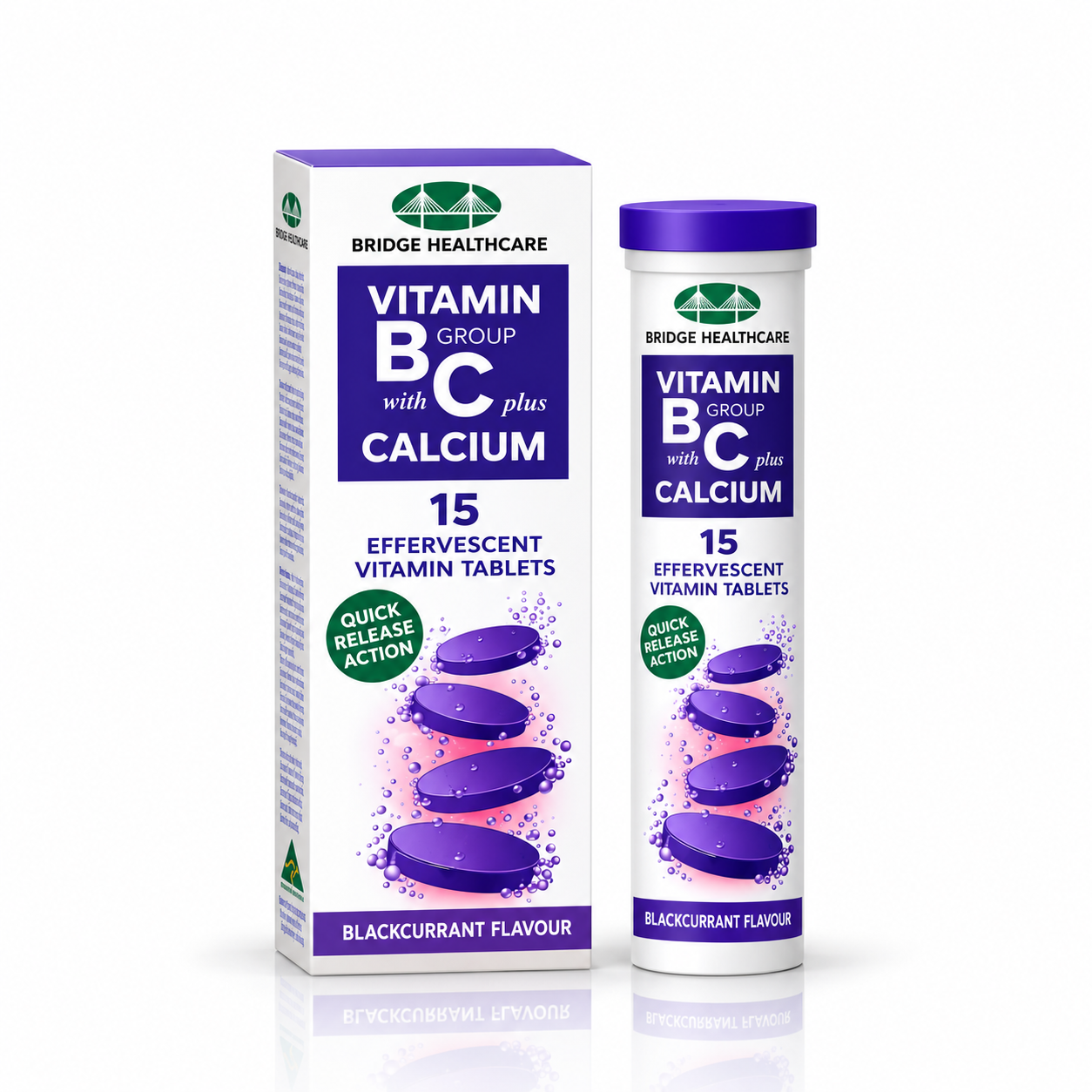
VITAMIN B COMPLEX with C plus CALCIUM
Contains 8 vitamins as a vitamin supplement with the added benefits of calcium. Deficiency and increased requirement of vitamin C and B vitamins. Deficiency and increased requirement of calcium.
Thiamine Nitrate ( Vitamin B1) 15 mg
Riboflavine Sodium Phosphate 15 mg
Nicotinamid 50 mg
Calcium Pantothenate 25 mg
Pyridoxine Hydrochloride ( Vitamin B6 ) 10 mg
Biotin ( Vitamin H) 150 mcg
Ascorbic Acid ( Vitamin C ) 1 g
Calcium ( as Calcium Pantothenate 25 mg
and Calcium Carbonate 157.1 mg ) 65 mg
List of excipients:
Aspartame, beetroot juice, sodium bicarbonate, sodium chloride, sucrose and blackcurrant flavour
Therapeutic Indications
Living fast, playing hard, working late, drinking, smoking and lacking sleep may mean you're missing out on an adequate diet that supplies your body's requirements of the vitamin B group and vitamin C.
Bridge Healthcare ( BRH ) Vitamin B group with vitamin C Effervescent tablets contain 8 vitamins as a vitamin Supplement with the added benefits of Calcium.
Indications in:
- Deficiency and increased requirement of vitamin C and B vitamins.
- Deficiency and increased requirement of Calcium
Posology and method of administration
Contraindications
Hypersensitivity to the active substance(s) or to any of the excipients.
Special warnings and precautions for use
Do not take BRH Vitamin B group with vitamin C Effervescent tablets on an empty stomach.
Do not exceed the stated dose.
High doses of Vitamin C might interfere with diagnostic measures. Inform your physician when taking this product before diagnostic measures are planned on being done.
Vitamin B & C plus calcium effervescent tablets also contains 478 mg sucrose and 232 mg Sodium which should be taken into account by those on a low diet.
Interaction with other medicinal products and other form of interaction
- Vitamin C (ascorbic acid) may interfere with some tests for glucose in the urine. Therefore, the administration of ascorbic acid (vitamin C) should be interrupted several days before such tests are performed. Acetylsalicylic acid reduces the absorption of ascorbic acid by about a third.
- At doses exceeding 5 mg, vitamin B6 (pyridoxine) neutralizes levodopa activity in Parkinson disease patients. However, no such antagonism is observed when levodopa is administered in combination with a decarboxylase inhibitor (such as benserazide or carbidopa).
- The vitamin B1 antagonists thiosemicarbazone and 5-fluorouracil neutralize the effect of vitamin B1. Antacids inhibit the resorption of vitamin B1.
- Some patients treated with deferoxamine and 500 mg Vitamin C daily have shown a deterioration in left ventricular function (often transitory)
Pregnancy and lactation
- The vitamins and minerals in the product are excreted into breast milk. This should be taken into consideration.
Effects on ability to drive and use machines
Undesirable effects
Frequency unknown: Hypersensitivity reactions or anaphylaxis. Symptoms may include difficulty breathing or swallowing, angioedema, itchy throat, skin reddening, rash
Gastrointestinal disorders:
Rare: abdominal discomfort, constipation, nausea, diarrhea, vomiting
Renal and urinary disorders
Rare: A slight orange-yellow discoloration of urine may be noticed.
This effect is harmless and is due to the vitamin B2 contained in the preparation
Overdose
Acute or chronic overdose of vitamin C (> 2 g / day in adults) may significantly elevates serum and urinary oxalate levels. In some instances, this results in hyperoxaluria, calcium oxalate crystalluria, calcium oxalate deposition, kidney stone formation, tubulointerstitial nephropathy, and acute renal failure.
Chronic consumption of high doses of ascorbic acid (> 500 mg / day in adults) may exacerbate iron overload and result in tissue damage in patients with hemochromatosis.
Overdose of vitamin C in individuals with glucose-6-phosphate dehydrogenase deficiency (> 3 g / day in children and > 15 g / day in adults) may result in oxidative hemolysis or disseminated intravascular coagulation.
Pharmacodynamic properties
Riboflavin Sodium Phosphate : they function as coenzymes for many
oxidases and reductases such as cytochrome e reductase, D- and L-amino acid oxidases, xanthine and aldehyde oxidase, succinic dehydrogenase, glucose oxidase and fumaric dehydrogenase. Riboflavin is also involved with pyridoxine in the conversion of tryptophan to nicotinic acid and is most important in the respiration of poorly vascularized tissues such as the cornea of the eye. Riboflavin is involved in the retinal pigment during light adaptation and lack of it causes impaired vision and photophobia in experimental animals .
Nicotinamide : Nicotinamide mononucleotide (NMN) is a type of molecule called a nucleotide. Nucleotides play many roles in your body, including as the building blocks of DNA.
Within your cells, NMN is converted into another molecule known as nicotinamide adenine dinucleotide (NAD). Your body needs NAD for a variety of functions involved in metabolism and energy production.
Calcium Pantothenate: also known as vitamin B5, is a vital nutrient that is often referred to as the "anti-stress vitamin. “Calcium Pantothenate targets a broad range of biological processes. It is crucial in synthesizing coenzyme-A (CoA), an enzyme necessary for fatty acid metabolism and the Krebs cycle, which generates cellular energy. Current research is exploring its potential in treating conditions like adrenal insufficiency, stress-related disorders, and metabolic syndromes, although the most common indication remains as a dietary supplement to prevent or treat pantothenic acid deficiency.
Pyridoxine Hydrochloride ( Vitamin B6 ) : Pyridoxal phosphate is the coenzyme, code carboxylase, involved in the decarboxylation of amino acids. It is also the co-factor of the 22 different transaminases present in animal tissues. Many neuro hormones require pyridoxal phosphate as a coenzyme in their synthesis. Pyridoxine is also involved in fat metabolism, especially of the essential fatty acids. It is involved in the synthesis of messenger RNA which determines amino acids sequence in polypeptide synthesis. Pyridoxine plays a most important role in protein metabolism
Biotin ( Vitamin H): Biotin is required in several specific carboxylation and decarboxylation reactions, including the carboxylation of pyruvic acid to form oxaloacetic acid. It is part of the coenzyme of several carboxylation enzymes fixing CO2 such as propionyl coenzyme A involved in the conversion of propionic acid to succinic acid in methylmalonic coenzyme A. Biotin is also involved in the conversion of acetyl CO2 to malonyl coenzyme A in the formation of long chain fatty acids.
Ascorbic Acid ( Vitamin C )
L-ascorbic acid acts as a biological reducing agent in hydrogen transport. It is involved in many enzyme systems for hydroxylation. It is involved in the detoxification of aromatic drugs and also acts in the production of adrenal steroids. Ascorbic acid is necessary for the formation of hydroxy proline which is a constituent of collagen, a component of intercellular material in bones and soft tissues. Ascorbic acid plays a synergistic role with vitamin E as intracellular antioxidants and free radical traps.
Calcium ( as Calcium Pantothenate 25 mg and Calcium Carbonate 157.1 mg ) : Calcium is the most abundant mineral in the human body. About 99% of it is stored in bones and teeth to give them strength. The remaining 1% in blood and tissues supports vital tasks like :
- Formation of bone and teeth
- Muscle contraction
- Normal functioning of many enzymes
- Blood clotting
- Normal heart rhythm
Pharmacokinetic properties
- Absorption and Bioavailability
Active Transport: Dominant at low doses; historically estimated to limit single-dose absorption to 4.8–8.3 mg, though newer data suggests passive pathways significantly increase uptake at higher doses.
Passive Diffusion: Becomes significant at pharmacological doses, allowing for linear, non-saturable absorption up to 1500 mg.
Bioavailability: Oral thiamine hydrochloride has a bioavailability of approximately 3.7% to 5.3% at standard doses, but higher doses result in disproportionately higher plasma concentrations.
- Distribution and Elimination
Distribution: Thiamin is widely distributed in the body, with limited storage (approximately 20–30 mg total). It crosses into red blood cells rapidly, maintaining equilibrium between plasma and whole blood.
Half-Life: The elimination half-life is short, ranging from 1 to 12 hours (specifically ~2.97–4.78 hours in high-dose studies), necessitating regular intake or dosing.
- Excretion: Excess thiamin is primarily excreted by the kidneys as free thiamin and metabolites. At physiological doses, excretion is minimal, but saturation leads to significant urinary recovery (e.g., 53% of a dose within 24 hours for some formulations).
Riboflavin Sodium Phosphate -Eqiv. Riboflavin( Vit B2)
- Absorption of riboflavin occurs via a saturable, active transport mechanism in the proximal small intestine. The absorption half-life is approximately 1.1 hours, and uptake is facilitated by bile salts, meaning consumption with a meal improves bioavailability.
- Distribution involves rapid conversion into flavocoenzymes; riboflavin is phosphorylated to flavin mononucleotide (FMN) in the gastrointestinal mucosa, erythrocytes, and liver, which is then converted to flavin adenine dinucleotide (FAD) in the liver. In blood plasma, about 60% of FAD and FMN is protein-bound, and the vitamin readily crosses the placenta.
- Elimination is characterized by a short biological half-life of 66 to 84 minutes following oral or intravenous administration. Urinary excretion is the primary removal pathway, accounting for approximately half of the overall clearance from plasma, with about 9% of usual physiologic doses excreted unchanged.
Nicotinamide
- Absorption and Peak Concentration
- Oral absorption is rapid, with peak plasma concentrations typically reached within 0.75 to 3 hours after ingestion.
- Elimination and Half-Life
The elimination half-life is dose-dependent, ranging from approximately 1.5 hours for a 1-g dose to 7–9 hours for 4–6 g doses.
- Metabolism and Distribution
Nicotinamide undergoes extensive hepatic metabolism, with primary metabolites including nicotinamide N-oxide, 2-pyridone, and 1-methylnicotinamide. It distributes widely.
Calcium Pantothenate Eqiv. Pantothenic Acid (Vit B5)
- Absorption and Transport Pantothenic acid (Vitamin B5) is rapidly absorbed in the intestine, primarily via a saturable, sodium-dependent active transport system. At typical dietary levels, bioavailability is approximately 50%; however, at high doses, the transport system saturates, and absorption occurs via passive diffusion. Peak plasma concentrations are reached within 1 to 2 hours post-dose, and food consumption can delay this absorption peak by approximately 2 hours.
- Distribution and Metabolism Upon absorption, pantothenic acid is delivered directly into the bloodstream and distributed into extracellular fluids. It is rapidly taken up by tissues, including the liver, where it is converted into coenzyme A (CoA) and phosphopantetheine. The synthesis of CoA is regulated by pantothenate kinase, which is inhibited by end products CoA and acyl CoA. In humans, the vitamin is widely distributed, with normal whole-blood concentrations ranging from 1.6 to 2.7 μmol/L.
- Excretion and Pharmacokinetics The primary route of elimination is urinary excretion, with approximately 70% of an oral dose excreted unchanged. Low urinary excretion (<1 mg/day) suggests deficiency.
Pyridoxine Hydrochloride ( Vitamin B6 )
- Pyridoxine (Vitamin B6) is rapidly and nearly completely absorbed from the gastrointestinal tract, with an estimated oral bioavailability of 100%. It undergoes extensive metabolism in the liver, where it is inactivated to 4-pyridoxic acid, while its active form, pyridoxal-5'-phosphate (PLP), is highly protein-bound and stored primarily in the liver, with lesser amounts in muscle and brain.
- The elimination half-life varies by form: inactive 4-pyridoxic acid has a long elimination half-life of approximately 15 to 20 days, whereas the half-life of free pyridoxine is much shorter (around 0.5 hours for the parent compound, though total body half-life estimates range up to 20–33 days due to tissue storage).
- Excess vitamin B6 is excreted rapidly in the urine as 4-pyridoxic acid and, at high doses, as unchanged pyridoxine, facilitated by active tubular secretion
Biotin ( Vitamin H)
- Biotin is rapidly absorbed after oral ingestion, reaching peak plasma concentrations within 1 to 2 hours. It exhibits a linear pharmacokinetic profile over typical supplemental doses, with an effective serum half-life of approximately 15 hours, though this can range from 1.8 to 18.8 hours depending on the dose. Steady-state concentrations are generally achieved after 3 days of continuous supplementation.
Peak serum levels are dose-dependent. Normal baseline circulating concentrations in supplemented individuals are very low, typically ranging from 0.1 to 0.8 ng/mL.
- Elimination occurs primarily through urinary excretion, with clearance potentially impaired in individuals with renal dysfunction.
Ascorbic Acid ( Vitamin C )
- Oral Absorption and Distribution Absorption is mediated by saturable sodium-dependent vitamin C transporters (SVCTs) in the small intestine. At moderate intakes (30–180 mg/day), absorption is 70–90% efficient, but drops to <50% at doses above 1 g/day. Plasma concentrations typically return to a steady-state baseline of 70–85 µmol/L within 24 hours.
- Elimination and Excretion Renal clearance is the dominant elimination pathway. The kidneys tightly reabsorb vitamin C at low plasma levels, but this mechanism saturates at higher concentrations, leading to quantitative urinary excretion of unmetabolized ascorbate.
Calcium ( as Calcium Pantothenate and Calcium Carbonate )
- The pharmacokinetics of calcium involve absorption primarily in the intestines, distribution where 99% is stored in the skeleton and 1% in extracellular fluids, and elimination via feces (80%) and urine (20%).
- Oral bioavailability varies by salt form and is influenced by food and anions; The intestinal residence time can be prolonged by certain foods or anions, which may enhance absolute bioavailability.
Pre-clinical safety data
Incompatibilities
Shelf life
Special precautions for storage
Marketing authorisation number
Marketing authorisation holder
Suite106/10 Edgeworth David Avenue, Hornsby NSW 2077, Australia
Same Category
Related Products
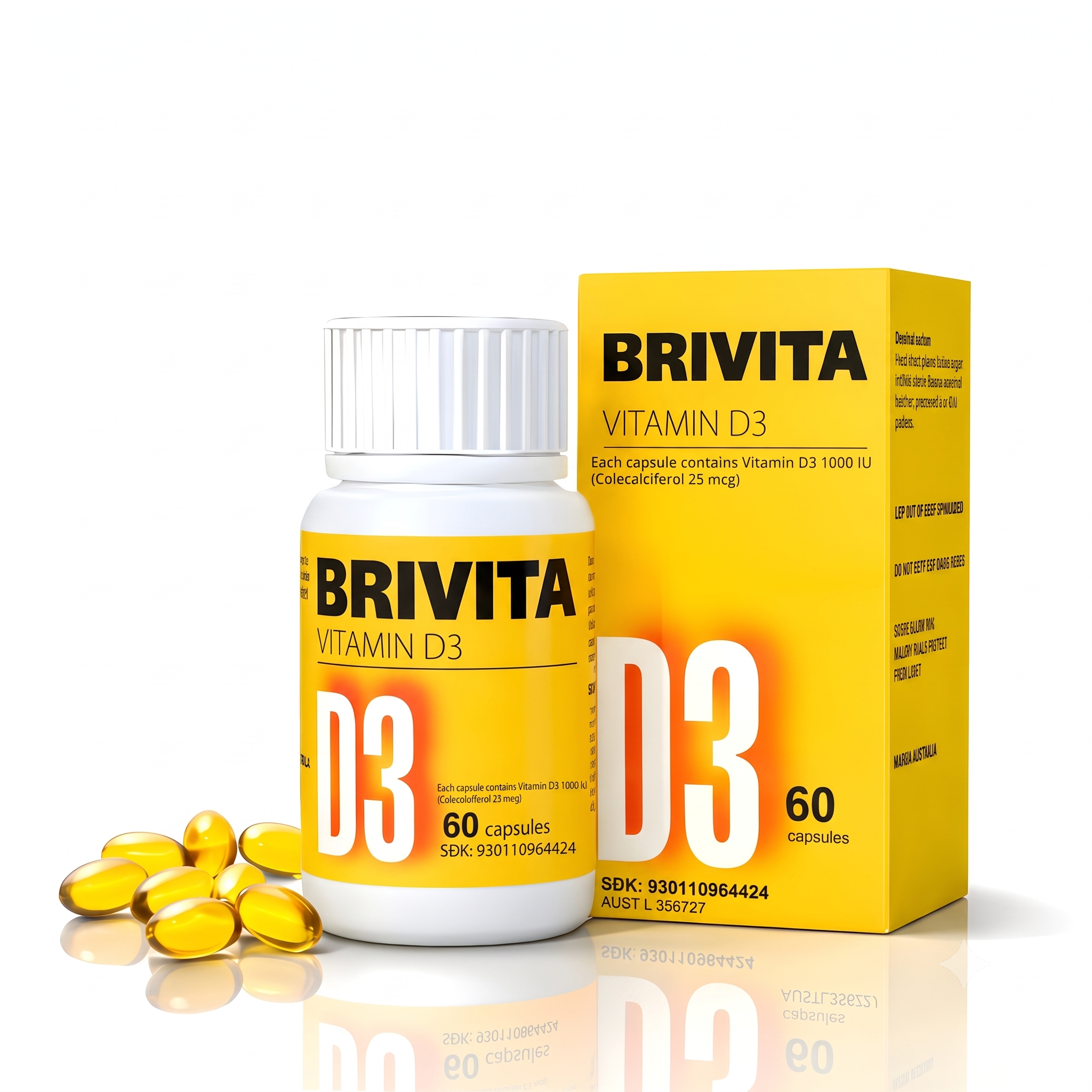
BRIVITA VITAMIN D3
Vitamin D3 is the body’s natural form of Vitamin D – essential for the efficient absorption of calcium and phosphorus which is vital for strong bones, muscle development and the immune system.
Bottle of 60 softgels
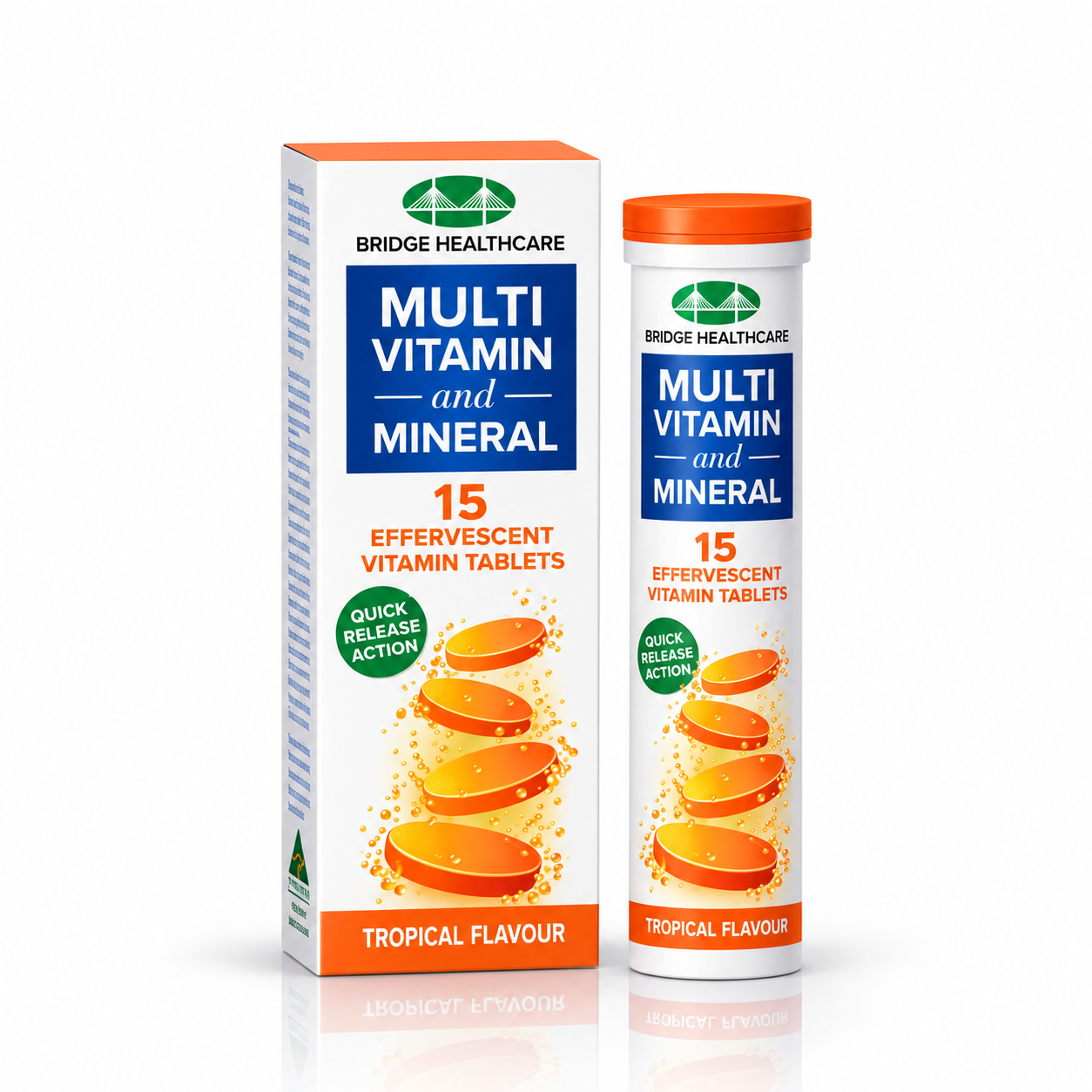
MULTI VITAMIN AND MINERAL
A complete multivitamin and mineral preparation for the prevention and treatment of general vitamin, mineral and trace element deficiencies of different origins due to increased requirements.
Tube of 15 effervescent tablets
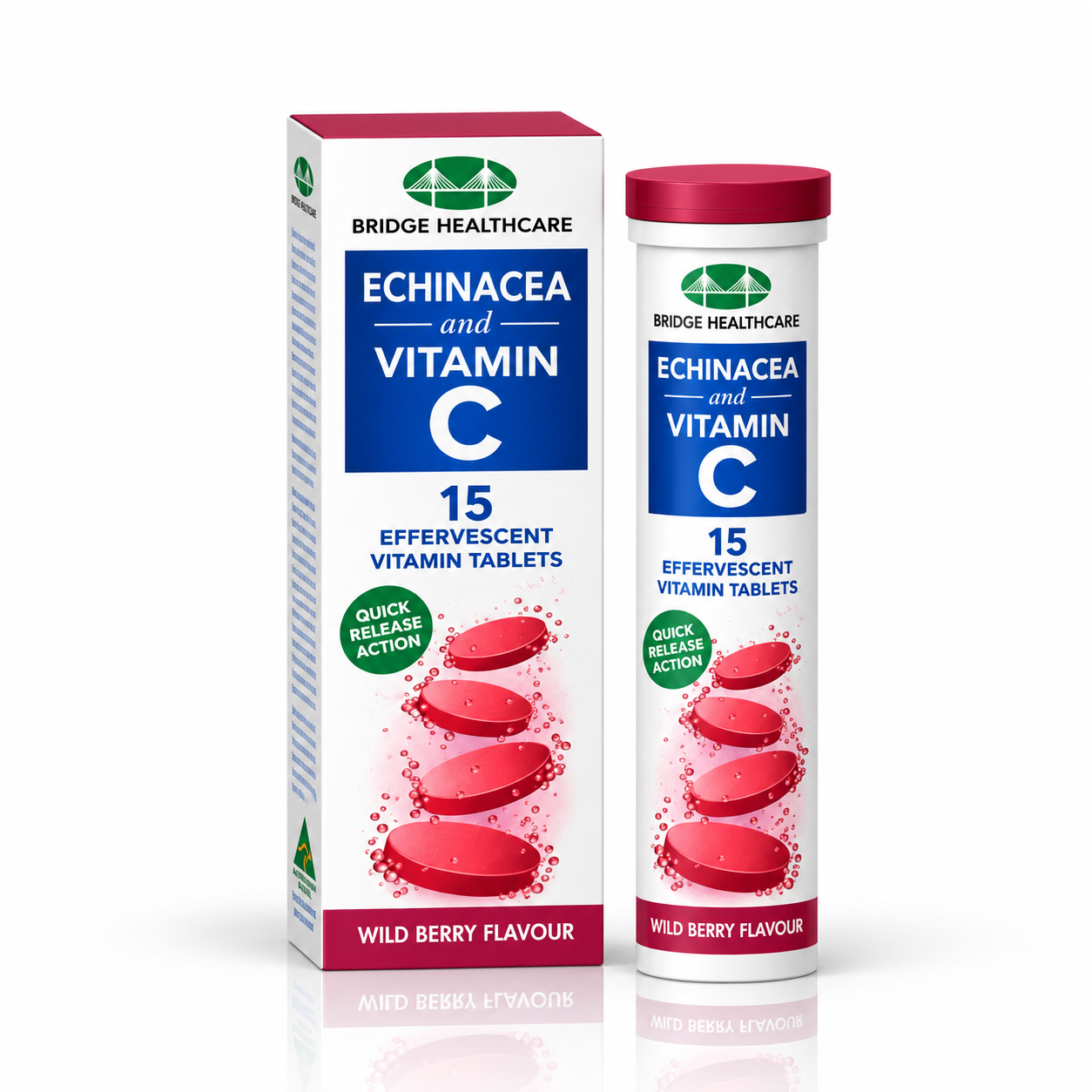
ECHINACEA plus VITAMIN C
Contains Vitamin C and Echinacea that helps to strengthen the immune system and prevent colds and flu.
Tube of 15 effervescent tablets