
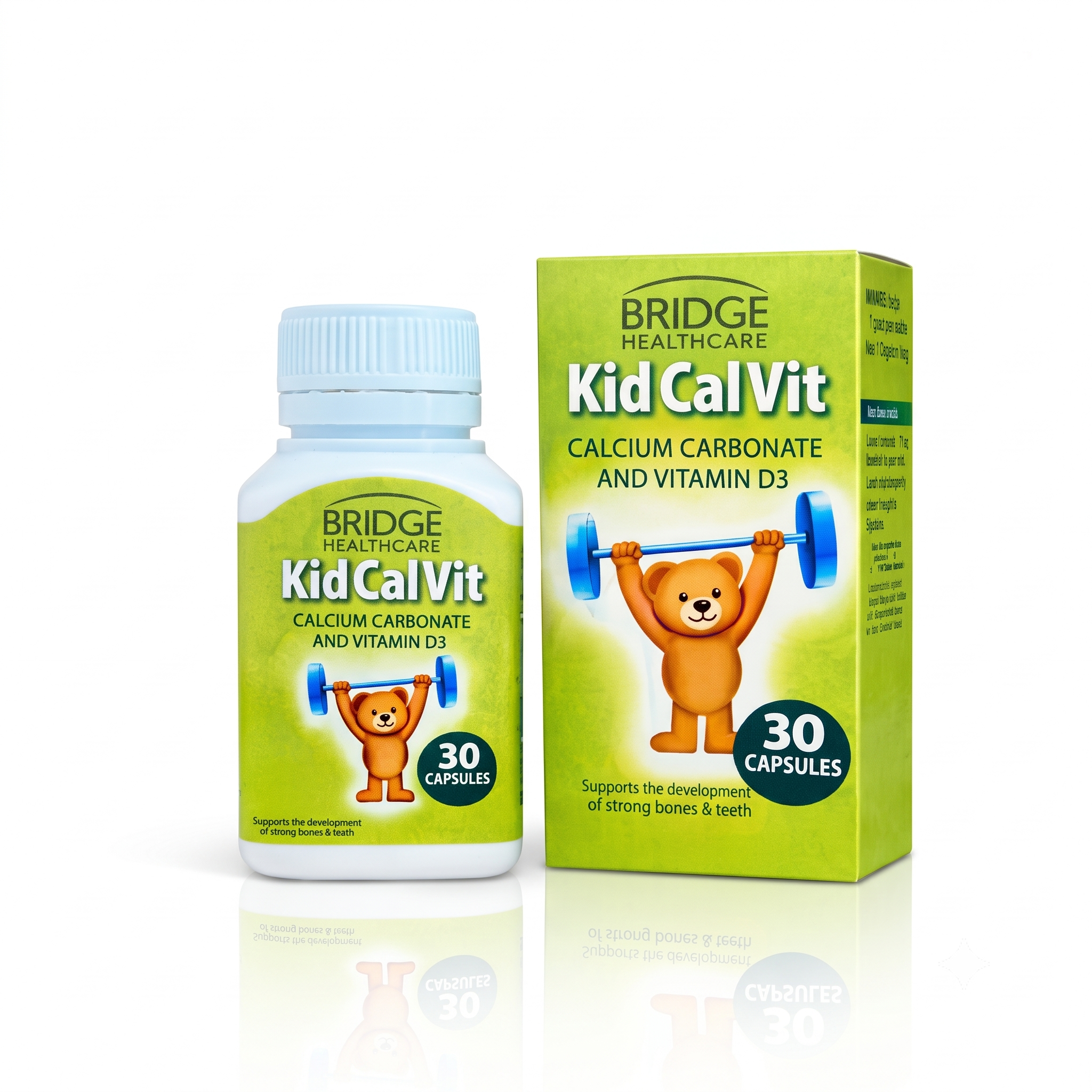
KIDCALVIT
Provide children three years and older with the benefits of both Calcium and Vitamin D3
Each capsule contains :
- Calcium carbonate: 250 mg (equivalent to 100 mg of Element calcium)
- Colecalciferol (Vitamin D3): 3.75 mcg ( equivalent to 150 I.U. vitamin D3)
- Excipients: Hydrogenated vegetable oil, soy oil, lecithin, sucralose, glycerol, gelatin, cochineal, iron oxide black, titanium dioxide, and purified distilled water.
Therapeutic indications
Source of calcium. A calcium supplement formulated to strengthen bone and tissue in growing and mature users:
- Prevention and treatment for osteoporosis
- Treatment for rickety disease, osteomalacia, bones loss, Scheunemann.
- Supplement calcium, vitamin D daily for the growing of bone, teeth system in children, teenager.
- For the demand of supplement calcium in case of lacking of it due to the diet, bone breaking treatment and other diseases ( eye diseases, allergic …. )
Posology and method of administration
- Place the tablet in your mouth and chew; when it breaks, it will release a sweet and fragrant strawberry flavor. The outer shell is sweet and edible.
Dosage : Children from 3 years old: Chew 1-2 capsules daily after meals, depending on daily calcium requirements.
Contraindications
Hypersensitivity to any of the tablet ingredients
Hypercalcaemia, severe hypercalciuria.
Kidney stones, severe renal failure.
Using cautiously in prolonged immobilisation with osteoporosis.
Patients who are receiving digitalis ( increase risk of digitalis toxic effect ).
Hypercalcaemia, severe hypercalciuria.
Kidney stones, severe renal failure.
Using cautiously in prolonged immobilisation with osteoporosis.
Patients who are receiving digitalis ( increase risk of digitalis toxic effect ).
Special warnings and precautions for use
Vitamin can be assistant if the dietary intake is inadequate.
Calcium excretion should be monitored in patients with mild hypercalciuria or chronic renal failure. If necessary, the dose should be reduced or the medication discontinued.
Calcium excretion should be monitored in patients with mild hypercalciuria or chronic renal failure. If necessary, the dose should be reduced or the medication discontinued.
Interaction with other medicinal products and other forms of interaction
- Certain drugs can reduce urinary calcium excretion: thiazide diuretics, clopamid. Ciprofloxacine, chlorthalidon, antispasmodics
- Calcium salts may reduce the absorption of demeclocyclin, doxycyclin, metacyclin, minocyclin, oxytetracyclin, tetracyclin. Enoxacin, fleroxacin, levofloxacin, lomefloxacin, norfloxacin, pefloxacine, iron, zinc and some other necessary minerals.
- Calcium increases cardiotoxicity of digitalis glycosides because increasing blood calcium levels will increase the inhibitory effect of Na+, K+, ATPase of cardiac glycozid.
- Glucocorticoid, phenytoin reduce calcium absorption through the gastrointestinal tract. Phytate and oxalate regimes reduce calcium absorption because they form complexes difficult to absorb
- Phosphate, Calcitonin, sodium sulfate, furosemind, magnesium, cholestyramine, estrogen, some anticonvulsants also reduce blood calcium levels
- Thiazid diuretics, on the contrary, increase blood calcium levels.
- Excessive use of mineral oil can interfere with absorption of vitamin D in the intestine.
- Do not use vitamin D simultaneously with phenobarbital and / or phenytoin (and possibly with other drugs that induce liver enzymes) because these drugs can reduce 25 - hydroxyergocalciferol levels and 25 - hydroxy - colecalciferol in plasma and increased vitamin D metabolism into inactive substances.
- Do not use vitamin D simultaneously with corticosteroids because corticosteroids hinder the effects of vitamin D.
- Vitamin D should not be used concomitantly with cardiac glycosides because of the glycoside toxicity that supports the heart because of increased blood calcium, leading to arrhythmias.
- Calcium salts may reduce the absorption of demeclocyclin, doxycyclin, metacyclin, minocyclin, oxytetracyclin, tetracyclin. Enoxacin, fleroxacin, levofloxacin, lomefloxacin, norfloxacin, pefloxacine, iron, zinc and some other necessary minerals.
- Calcium increases cardiotoxicity of digitalis glycosides because increasing blood calcium levels will increase the inhibitory effect of Na+, K+, ATPase of cardiac glycozid.
- Glucocorticoid, phenytoin reduce calcium absorption through the gastrointestinal tract. Phytate and oxalate regimes reduce calcium absorption because they form complexes difficult to absorb
- Phosphate, Calcitonin, sodium sulfate, furosemind, magnesium, cholestyramine, estrogen, some anticonvulsants also reduce blood calcium levels
- Thiazid diuretics, on the contrary, increase blood calcium levels.
- Excessive use of mineral oil can interfere with absorption of vitamin D in the intestine.
- Do not use vitamin D simultaneously with phenobarbital and / or phenytoin (and possibly with other drugs that induce liver enzymes) because these drugs can reduce 25 - hydroxyergocalciferol levels and 25 - hydroxy - colecalciferol in plasma and increased vitamin D metabolism into inactive substances.
- Do not use vitamin D simultaneously with corticosteroids because corticosteroids hinder the effects of vitamin D.
- Vitamin D should not be used concomitantly with cardiac glycosides because of the glycoside toxicity that supports the heart because of increased blood calcium, leading to arrhythmias.
Pregnancy and lactation
No harm when used at the recommended dose.
Vitamin D and its metabolites pass into breast milk.
Vitamin D and its metabolites pass into breast milk.
Effects on ability to drive and use machines
There are no data the effect of this product on driving capacity and use machines
Undesirable effects
Adverse reactions are list below, by system organ class and frequency. Frequencies are defined as : uncommon ( >1/1,000 to < 1/100) rare ( .1/10,000 to <1/1,000) or very rare (<1/10,000)
Metabolism and nutrition disorders
Uncommon: Hypercalcaemia and hypercalciuria
Very rare: Seen usually only in overdose, mild-alkali syndrome
Gastrointestinal disorders
Rare: Constipation, flatulence, nausea, abdominal pain and diarrhoea
Very rare: dyspepsia
Skin and subcutaneous disorders
Rare: pruritus, rash and urticaria
Metabolism and nutrition disorders
Uncommon: Hypercalcaemia and hypercalciuria
Very rare: Seen usually only in overdose, mild-alkali syndrome
Gastrointestinal disorders
Rare: Constipation, flatulence, nausea, abdominal pain and diarrhoea
Very rare: dyspepsia
Skin and subcutaneous disorders
Rare: pruritus, rash and urticaria
Overdose
Inform your doctor immediately if you experience any signs of high Vitamin D/Calcium levels, such as nausea, vomiting, loss of appetite, excessive thirst, frequent urination, mood changes, or unusual fatigue. Other symptoms of overdose may include seizures, disorientation, and irregular heartbeat.
This is not a complete list of possible side effects. If patients experience other symptoms not listed above, they should contact their doctor.
This is not a complete list of possible side effects. If patients experience other symptoms not listed above, they should contact their doctor.
Pharmacodynamic properties
ACT code: A12 AX
KIDCALVIT is a calcium and vitamin D3 supplement with a special combination formula for daily use in children to help build strong bones and promote healthy physical development. Vitamin D3 helps maximize calcium absorption into bones and teeth.
- Calcium is known as the "essential bone-building nutrient," especially during childhood and adulthood – when the skeleton is developing. Calcium is the most abundant mineral in the human body. About 99% of it is stored in bones and teeth to give them strength. The remaining 1% in blood and tissues supports vital tasks like :
KIDCALVIT is a calcium and vitamin D3 supplement with a special combination formula for daily use in children to help build strong bones and promote healthy physical development. Vitamin D3 helps maximize calcium absorption into bones and teeth.
- Calcium is known as the "essential bone-building nutrient," especially during childhood and adulthood – when the skeleton is developing. Calcium is the most abundant mineral in the human body. About 99% of it is stored in bones and teeth to give them strength. The remaining 1% in blood and tissues supports vital tasks like :
- Formation of bone and teeth
- Muscle contraction
- Normal functioning of many enzymes
- Blood clotting
- Normal heart rhythm
Pharmacokinetic properties
Calcium
Colecalciferol (Vitamin D3)
- Absorption: Vitamin D3 is absorbed in the small intestine. Bile is required for absorption of vitamin D in the intestine.
- Colecalciferol and its metabolite circulate in the blood associated with a specific globulin. Colecalciferol is converted in the liver by hydroxylation to 25-hydroxycolecalciferol activated form. In fact, 25-hydroxycolecalciferol has a higher affinity to protein than the parent compound. In the kidney, it is then converted to form 1.25 hydroxycolecalciferol. 1.25 hydroxycolecalciferol is a metabolite that increases calcium absorption. Non-metabolizable vitamin D is stored in adipose tissue and muscle tissue.
- Half-life of vitamin D: 19-25 hours.
- Vitamin D and its metabolites are excreted primarily through bile and feces, only a small amount appears in the urine. Some types of vitamin D can be released into breast milk.
- The pharmacokinetics of calcium involve absorption primarily in the intestines, distribution where 99% is stored in the skeleton and 1% in extracellular fluids, and elimination via feces (80%) and urine (20%).
- Oral bioavailability varies by salt form and is influenced by food and anions; The intestinal residence time can be prolonged by certain foods or anions, which may enhance absolute bioavailability.
Colecalciferol (Vitamin D3)
- Absorption: Vitamin D3 is absorbed in the small intestine. Bile is required for absorption of vitamin D in the intestine.
- Colecalciferol and its metabolite circulate in the blood associated with a specific globulin. Colecalciferol is converted in the liver by hydroxylation to 25-hydroxycolecalciferol activated form. In fact, 25-hydroxycolecalciferol has a higher affinity to protein than the parent compound. In the kidney, it is then converted to form 1.25 hydroxycolecalciferol. 1.25 hydroxycolecalciferol is a metabolite that increases calcium absorption. Non-metabolizable vitamin D is stored in adipose tissue and muscle tissue.
- Half-life of vitamin D: 19-25 hours.
- Vitamin D and its metabolites are excreted primarily through bile and feces, only a small amount appears in the urine. Some types of vitamin D can be released into breast milk.
Pre-clinical safety data
- There is further no information of relevance to the safety assessment in addition to what is stated in other parts of the PI
Incompatibilities
- Not applicable
Shelf life
2 years
Nature and contents of container
Each bottle contains 30 oval-shaped, dark pinkish-purple softgel capsule and have a strawberry scent.
Special precautions for disposal of a used medicinal product or waste materials derived from such medicinal product and other handling of the product
- No special requirements
Special precautions for Storage
Do not store above 300C
Marketing authorisation number
AUST L 153818
Marketing authorisation holder
BRIDGE HEALTHCARE PTY.LTD
Suite106/10 Edgeworth David Avenue, Hornsby NSW 2077, Australia
Suite106/10 Edgeworth David Avenue, Hornsby NSW 2077, Australia
Same Category
Related Products
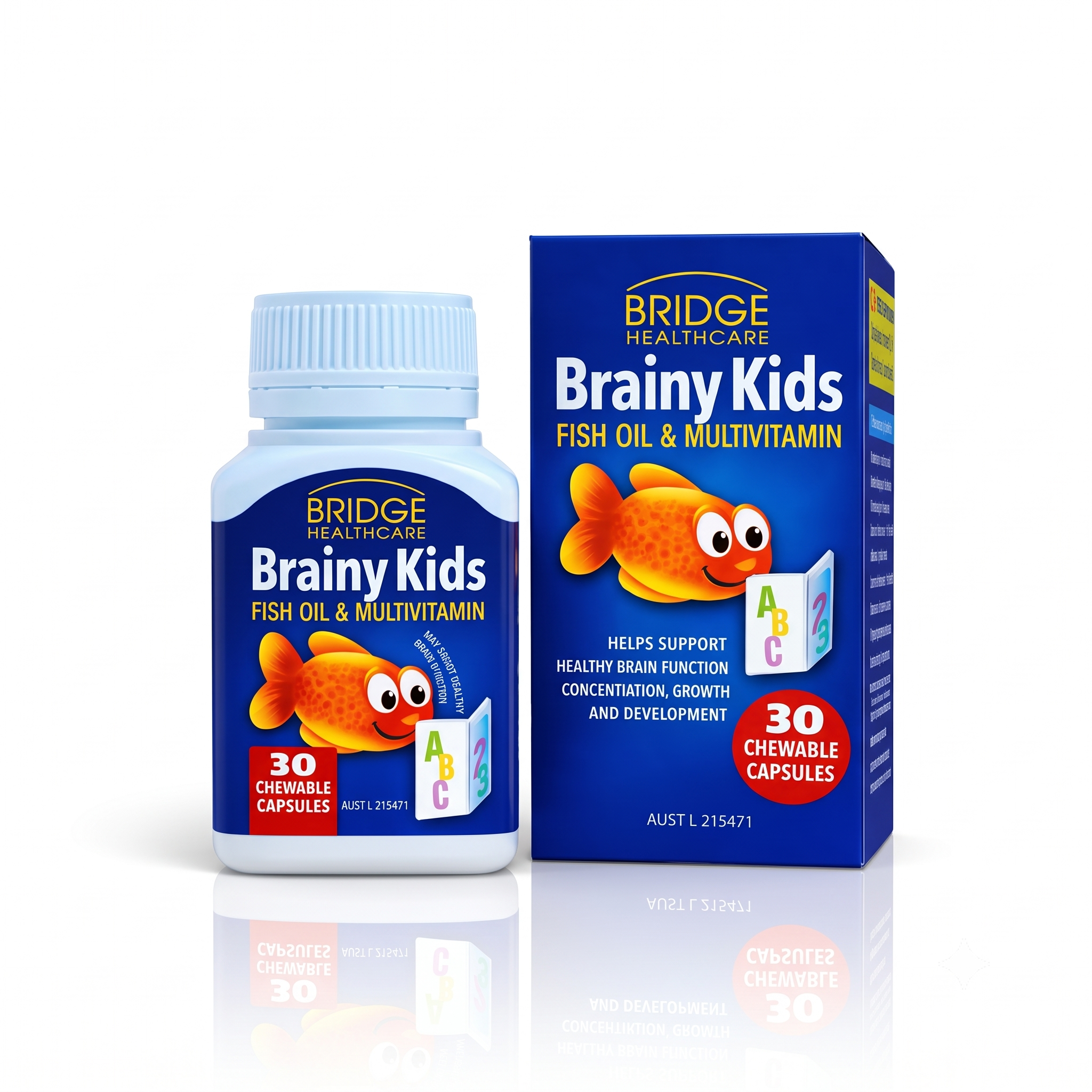
BRAINY KIDS
Omega-3 nutrients plus vitamins to assist healthy brain function helping to improve reading, spelling and behaviors
Bottle of 30 chewable capsules
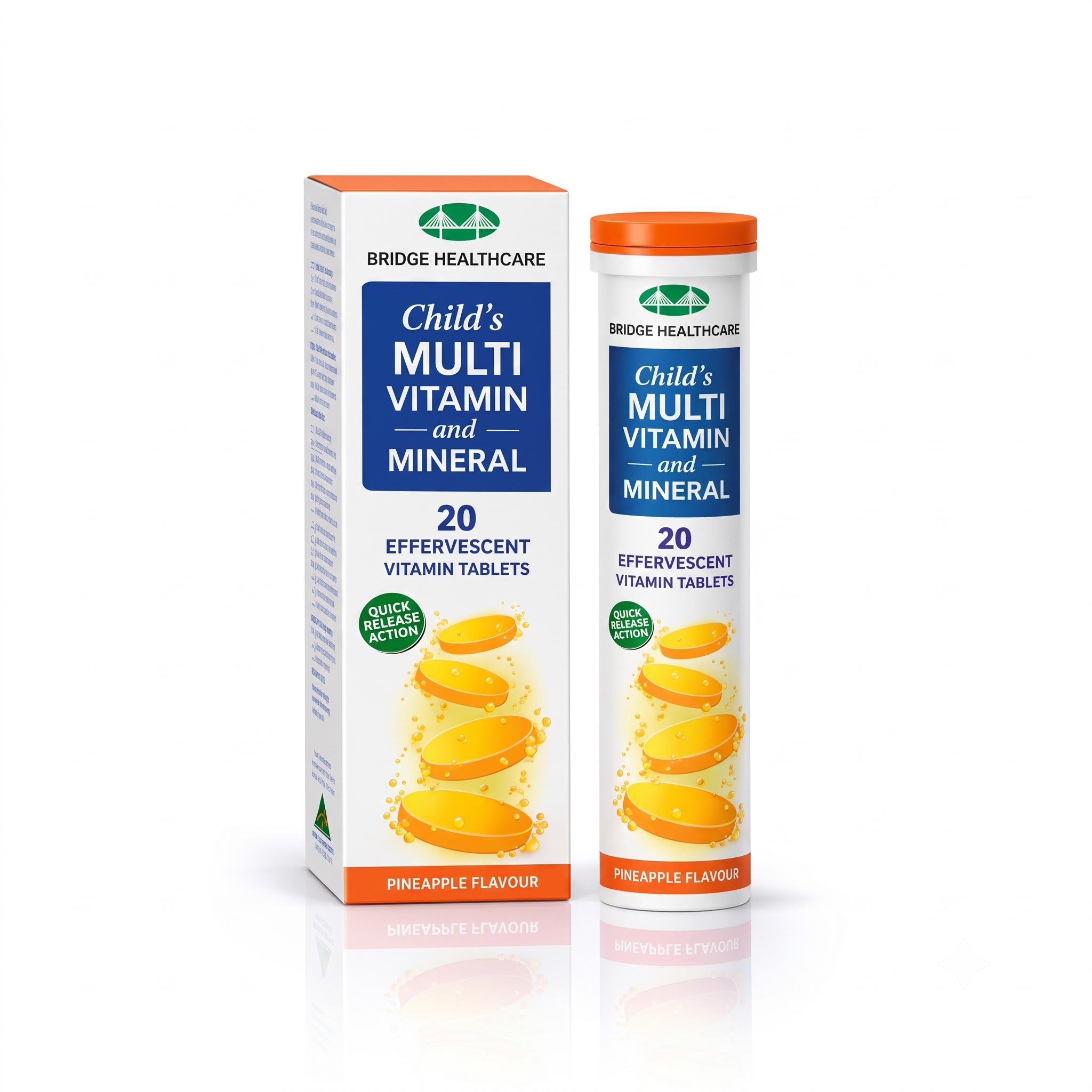
CHILD'S MULTIVITAMIN AND MINERAL
Vitamin and mineral supplements, extra Vitamin C for children. As a therapeutic nutritional adjunct in conditions where the absorption of vitamins and minerals is suboptimal
Tube of 20 effervescent vitamin tablets